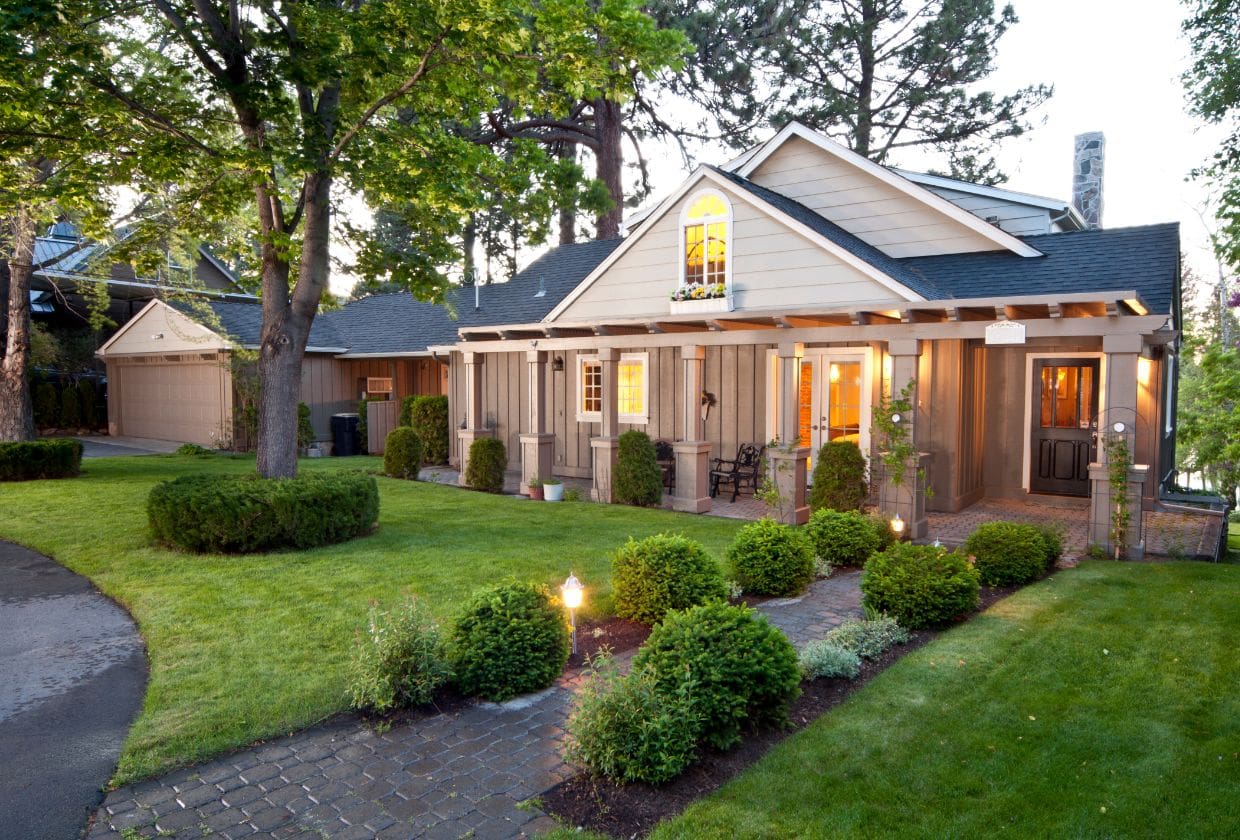
Your home is more than just a place to live—it’s where you build memories and invest your hard-earned money. Home insurance is designed to protect your investment by covering the home you own, the belongings inside it, and liability for accidents that happen on your property. Condo insurance is similar, too.
Knowing what goes into home insurance pricing can help you get the right coverage without overpaying. And with a few smart choices, you might even lower your costs while keeping strong protection in place.
Ready to explore affordable options? Keep reading for more insights. The Baldwin Group is here to help you find the best home insurance policy for your needs.
How much is home insurance?
According to the National Association of Realtors, the average U.S. homeowner paid $2,377 for homeowners’ insurance in 2024—just over $198 per month. If you look up national averages, you’ll see some sources report slightly different numbers, along with varying rankings for the states with the highest and lowest premiums.
What they can all agree on, though, is that home insurance costs have surged, nearly 38 percent since 2019, driven by industry consolidation, market disruptions, and the rising costs of natural disaster recovery.
In some high-risk areas, insurers have stopped renewing policies or have withdrawn entirely due to increased claims, soaring replacement costs, and challenges in the reinsurance market. This has made it harder for homeowners in disaster-prone regions, such as those affected by wildfires, earthquakes, hurricanes, tornadoes, mudslides, and sinkholes, to secure affordable, or even available, coverage.
How much does homeowners’ insurance cost by state?
Home insurance costs vary widely depending on location, regional risks, and local construction costs. In lower-risk states, annual premiums for a home with $300,000 in dwelling coverage can be under $1,000, while in high-risk areas, particularly those prone to hurricanes and severe storms, premiums can reach and surpass $5,000 a year.
Our friends at Bankrate have mapped out what the average annual home insurance premium looks like across the country. At the extremes, Nebraska averages over $5,400 a year, while Vermont homeowners pay an average yearly premium of just $800.
Here’s a look at the average cost of homeowners’ insurance in some states where we’ve recently secured policies on behalf of our clients:
- Alabama: $2,879 (about $240 monthly)
- Arizona: $2,099 (about $175 monthly)
- Florida: $5,376 (about $448 monthly)
- Illinois: $2,079 (about $173 monthly)
- Maryland: $1,606 (about $134 monthly)
- North Carolina: $2,394 (about $199 monthly)
- Pennsylvania: $1,208 (about $100 monthly)
Remember, the home insurance rate you get will depend on a variety of factors, from your location and home value to coverage limits and deductible choices. In the next section, we’ll break down how insurance premiums are calculated and what you can do to keep costs as low as possible based on your specific situation.
If you’d rather skip ahead and get personalized home insurance quotes right now, start the process with a Baldwin Group expert.
How much homeowners’ insurance do I need?
The right amount of home insurance is all about making sure you’re covered if your home or belongings are damaged, stolen, or destroyed. You want to be able to repair or rebuild without worrying about costs. Here’s what to keep in mind:
- Dwelling coverage: This should cover the full cost of rebuilding your home, including materials and labor. Keep in mind, ‘market value’ isn’t the same as what it costs to replace your home today—or in the future. Factors like your home’s size, materials used, and local labor costs all play a role, and these can rise with inflation and cost of living. It’s a good idea to plan for that.
- Other structures coverage: A typical homeowners’ insurance policy will usually cover a detached garage, gazebo, or fence, but there’s a limit, generally around 10 percent of your dwelling coverage. That might be fine for a basic shed, but if you’ve added something more valuable, like a workshop or guesthouse, you’ll want to double-check your policy. Otherwise, you could be stuck paying out-of-pocket if something happens. A quick review can help make sure everything on your property is well protected.
- Personal property coverage: Your standard home insurance usually covers things like furniture, clothes, and electronics, but it might not fully protect high-value items, like jewelry or artwork. Many policies have limits on things like stolen jewelry, which could leave you with a gap. Consider what’s really important to you—family heirlooms, engagement rings, or pricey gadgets—and make sure they’re fully covered by adding extra protection. A home inventory is a great way to figure out how much coverage you need.
- Liability protection: This helps with legal and medical costs if someone gets hurt on your property. Most policies offer around $100,000 coverage, but if you’re looking for a greater sense of protection, higher limits could be a good idea, especially if you have a lot of visitors or live in a busy area.
- Medical payments coverage: Accidents happen, and if a guest gets hurt at your home—maybe they trip on your walkway or slip on a wet floor—medical payments coverage helps cover their medical bills, no matter who’s at fault. It’s designed for minor injuries and can help pay for things like urgent care visits or stitches without getting into a bigger liability claim. This is a great way to take care of unexpected medical expenses for visitors without turning it into a legal headache.
- Loss of use insurance: Also known as ALE, or coverage for Additional Living Expenses, loss of use protection helps cover the extra costs of living somewhere else if your home becomes uninhabitable after a covered event. Loss of use can help with expenses, like hotel stays, meals, and added commuting costs, while your home is being repaired. Keep in mind that there are usually limits to this coverage, so it’s a good idea to check your policy to see if loss of use or ALE is included.
It’s always a good idea to chat with an insurance professional to make sure your coverage fits your needs. Want a personalized home insurance quote? The Baldwin Group can help. Get your quote now!
How is home insurance calculated?
Getting a competitive rate sounds complex, but if you want to know how to calculate home insurance costs, approach it pretty much the same way most insurance providers do.
Step 1 – Insurers start by estimating the average claims paid for homes similar to yours. This baseline, called the pure premium, reflects the cost of covering potential losses in your area.
Step 2 – Next, insurers factor in operating expenses, including employee salaries, agent commissions, taxes, and a profit margin. This forms the base premium.
Step 3 – From there, insurance providers adjust the base premium based on details about your home and household. Here’s what insurers take into account:
- Home age, size, and condition: Older homes with outdated systems typically cost more to insure, while fire-resistant materials or recent upgrades can lower rates. Detached structures, like a garage or guesthouse, may be included in a policy but may raise your monthly premium slightly. Also, some regions have stricter building codes, which can reduce the risk of damage in case of a disaster.
- Replacement cost: This is the estimated cost to rebuild your home — not its market value. It factors in inflation, rising labor costs, and material price increases. Homes in areas with higher construction costs usually see higher premiums.
- Natural disasters: Homes located in risk-prone areas tend to have higher premiums. For example, homes in coastal areas face additional risks from flooding, which is not typically covered by standard homeowners’ policies and may require separate flood insurance.
- Elevation and terrain: Homes on hillsides or in areas prone to landslides, mudslides, or snow damage may see higher premiums. Similarly, low-lying areas that experience sinkholes are often more expensive to insure.
- Proximity to emergency services: Homes closer to fire departments or emergency services may see lower premiums since faster response times reduce the risk of severe damage.
- Local economy: In regions with booming real estate markets, insurance rates might increase to account for rising home values and construction expenses.
- Crime rates: Homes in areas with high burglary and vandalism rates often face higher premiums, as insurers factor in the rising likelihood of claims for property damage or theft.
- Coverage levels: A basic policy protects against common risks, such as damage to your home’s structure, detached buildings, personal property, and liability or medical payments if someone gets hurt on your property. However, adding endorsements, like flood, earthquake, or extended replacement (providing extra funds if rebuilding costs exceed what basic insurance will pay) can raise your premium.
- Choice of deductible: A higher deductible typically lowers your premium as you take on more costs. A lower deductible means a higher premium, with the insurer covering more. It’s about balancing your monthly savings from a low premium with what’s affordable in the form of an out-of-pocket deductible.
- Credit score: Insurers also consider your credit score when setting premiums. People with higher credit scores are often seen as lower risk, and that may result in lower premiums. Those with lower scores may face higher rates.
- Claims history: If a homeowner has filed multiple claims in the past, it may indicate a higher risk, leading to higher premiums. Homeowners with fewer past claims and good credit often receive better pricing.
- Home-based businesses: Running a business from home can increase your homeowners’ insurance premium due to the higher risk of business-related incidents or liability.
Step 4 – Finally, insurers subtract any discounts you qualify for, such as bundling policies, installing security systems, or having a newer roof. We’ll get into that in the next section. But if you’re ready to get a no-obligation home insurance quote today, start by filling out our online quote form.
Home insurance discounts you may qualify for
When you’re discussing home insurance options with your insurance broker or provider, don’t forget to ask about discounts. Here are a few that can help lower your premium:
- Multi-policy discount: Bundling your home insurance with other policies, like auto or life insurance, could help you save money with the same provider.
- Loyalty discount: If you’ve been with the same insurer for a few years, they may reward your loyalty with adjusted pricing.
- Claims-free discount: If you’ve gone without filing claims for a while, many insurers offer discounts since you may be seen as a lower-risk customer.
- Senior discount: Some insurers offer discounts to retirees, as they may be at home more and have a lower risk of filing claims.
- Security system discount: If you have an alarm system, surveillance cameras, or smart devices in your home, you may qualify for a lower premium because these features lower the risk of theft or damage.
- Smart home discount: Homes equipped with smart tech, like water leak detection systems or smart thermostats, might qualify for a discount since these devices help prevent damage and improve safety.
- Fire alarm discount: Installing smoke detectors or fire alarms can help reduce your premium by cutting down on fire-related risks.
- Storm-resistant features discount: Homes with storm shutters, impact-resistant windows, or reinforced roofs could earn you a discount since these features help protect your home from weather damage.
- New or upgraded roof discount: If you’ve recently replaced or upgraded your roof, especially with impact-resistant materials, you might see savings because of the reduced risk of leaks or storm damage.
- Gated community discount: If you live in a gated community with added security, insurers might offer a discount because these areas tend to be safer.
Keep in mind that not every insurer offers the same discounts, so it’s a good idea to check with your provider about any discounts you might be eligible for. It never hurts to ask, and you might be surprised by how much you can save.
The key to finding the best rate? Shop around. The Baldwin Group can evaluate and compare over 150 trusted insurance companies to find the best option for your needs. Get your free, no-obligation homeowners’ insurance quotes now.
How to reduce homeowners’ insurance premiums
Lower home insurance premiums with these practical tips:
- Increase your deductible: A home insurance deductible is the amount you pay out-of-pocket before your insurance kicks in. Choosing a higher deductible can lower your monthly premium, but it also means you’ll pay more upfront if you file a claim. For example, with a $5,000 deductible on a $50,000 claim, you’d pay the first $5,000, and your insurer would cover the remaining $45,000. If you can afford a higher out-of-pocket cost, choosing a higher deductible can be a smart way to lower your premium. A lower deductible might be better if you prefer predictable costs and don’t mind paying a bit more each month.
- Bundle your policies: Bundling your home and auto insurance with the same provider can save you anywhere from 5 percent to 25 percent on each policy, depending on your location and coverage. While exact savings vary by state and insurer, bundling insurance policies is a smart way to cut costs. Plus, insurers love it because it makes you a more loyal customer — so it’s a win-win.
- Review your policy regularly: It’s important to check your coverage each year to make sure you’re not paying for things you no longer need. Life changes, your home’s value might have gone up, or you might have sold possessions that you had protected by your policy. Have a quick review to make sure you’re only paying for what still matters. Learn more in our recent article about spring cleaning your insurance coverage.
- Keep your credit score in good shape: Insurers often use your credit score to set premiums, as those with better credit tend to file fewer claims. If your credit score improves, let your insurer know—they may be able to lower your premiums.
Shopping around for the best home insurance rate takes time, but we make it easier. At the Baldwin Group, we do the comparison shopping for you, so you don’t have to spend hours gathering quotes. Get a no-obligation homeowners’ insurance quote today and find out how much you could save.
Inexpensive home insurance: Is it worth it?
While everyone wants affordable home insurance, it’s important to find the right balance between cost and coverage. Going for the least expensive option might seem like a win, but it can quickly turn into a problem. You might think you’re covered, but when something goes wrong, you could find out the hard way that you’re underinsured. That’s almost as risky as having no insurance at all.
Plus, less expensive policies often come with trade-offs. They may have higher deductibles, which could be stressful if you ever need to file a claim. And budget-friendly policies may offer fewer coverage options or leave out important protections. On top of that, low-cost home insurance tends to offer less personalized service, harder-to-reach assistance when it comes to understanding your coverage, and hurdles to adjusting your policy as your needs change.
Want a better idea of how these trade-offs could impact your coverage? At The Baldwin Group, we’ll help you find the right balance between cost and protection — so you’re saving money without giving up the coverage that really matters.
Why get homeowners’ insurance quotes through a broker?
Remember, home insurance protects your home, belongings, and liability, but your costs depend on factors like location, risk, and coverage choices. A low-cost policy might look good upfront but could mean higher deductibles or less coverage than you need. Plus, a higher credit score might help you get better rates. It’s all about balancing your monthly premium and annual deductible.
Working with a broker, like The Baldwin Group, helps make finding the right home insurance easier and more affordable. Here’s how we help:
- More options, better rates: We work with multiple trusted insurers, giving you access to coverage options and exclusive rates you won’t find on your own. Plus, we know which discounts each provider offers, so you get the best value.
- Coverage that fits your needs: We take the time to understand your needs and recommend the right protection, so you’re not overpaying for what you don’t need or missing out on what you do.
- We do the shopping for you: Instead of spending hours researching policies and comparing quotes, let us handle the legwork and find the best coverage at the best price.
With The Baldwin Group, you don’t have to stress about home insurance. We’ll guide you through the process and make sure you’re getting the right coverage without the hassle.
Have questions or want a personalized homeowners’ insurance quote? Contact us today and see how much you can save.