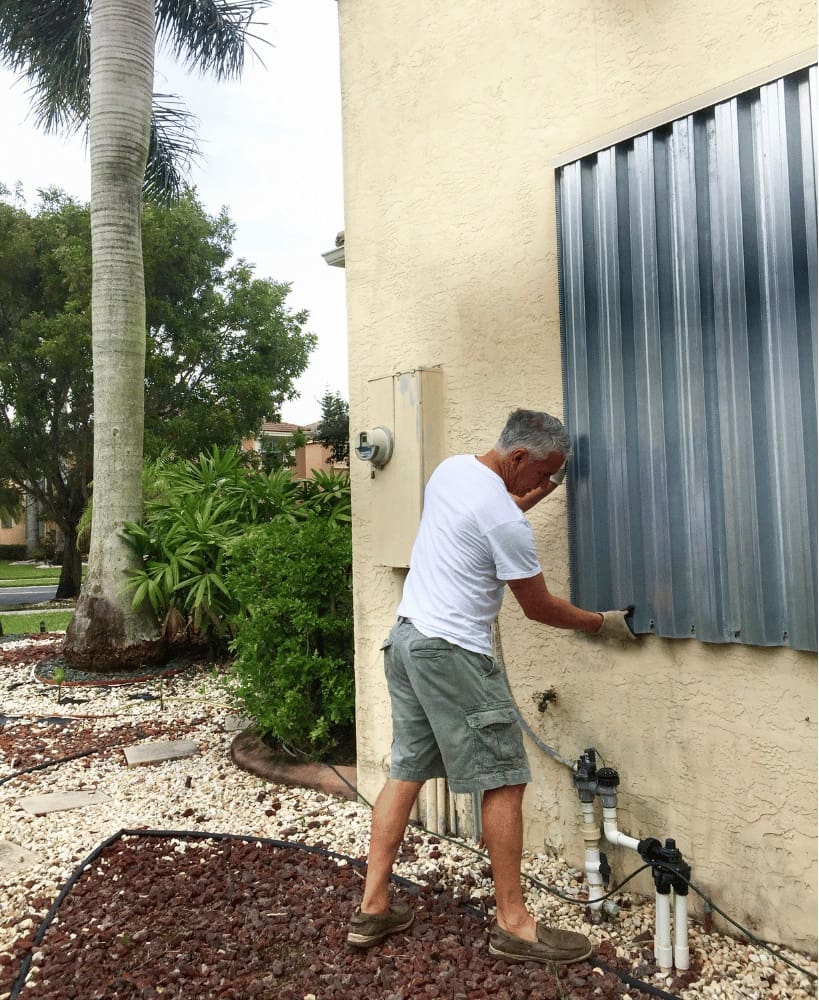
Caulking around openings
Caulking around exterior doors and windows can become mildewed or cracked from summer rains and the hot sun. This often leads to claims from water intrusion, not just in a hurricane, but any large rain event. The lack of a watertight seal around windows and doors is a common point of water intrusion from wind driven rain. Annual maintenance checks should be completed to ensure all caulking, seals and thresholds are adequate. Many roofing and window installation companies offer yearly maintenance contracts.
Emergency back-up generator
Power outages can leave your home without power for several days or even weeks. When this occurs, items within the home are exposed to higher than normal humidity levels as a result of no air conditioning. Items, such as fine furnishings, wall coverings, wood, paintings, wine, food and clothing, can sustain irreversible damage during this period. A back-up power source, such as a generator that is capable of providing power to parts or the entire home can eliminate this problem and keep your home operating properly. It is important to have a service contract for your generator and to test it regularly.
Prepare your home for responders
If your property is gated, you need to have a way for police and fire departments to access your home in an emergency, such as a Knox box. Ensure your property is clearly marked with street numbers so emergency services and responders can easily identify your location. Have a means to communicate with all responders at all times. If cell service is down, email may be a more reliable form of communication.
Secure fireplace dampers and flues
Fireplaces are often overlooked as an area of concern for water intrusion and often people place imported rugs or antique furniture in front of the fireplace. If even a small amount of water enters the chimney, these items can be damaged. Soot and other debris are also commonly found in the area after a storm. Ensure all fireplace dampers and flues are closed. Blankets and towels can be placed in this area to reduce any damage. Stretch wrap is also an easy way to cover the opening and ensure debris does not stain furniture or rugs.
Yard
Replace gravel/rock landscaping materials with a softer material, such as shredded bark or mulch. Trim trees and shrubbery away from structures and remove any weakened sections of trees that might easily break off and fall onto structures. Before a storm, remove yard objects, including lawn furniture, planters, bird feeders, and decorative objects, to prevent them from becoming flying missiles.
Furniture and household furnishings
These should be moved away from exterior doors and windows. If possible, elevate items, including drapes, and cover them with plastic. Place towels at the base of doors to absorb any water that may enter.
Valuables
- Maintain a current and complete inventory. In the event of significant loss, a detailed inventory may help to facilitate the claims process. The format can range from a simple list or spreadsheet to a comprehensive collections management database, but be sure to include the following:
- A description of each object, including author, title, materials, dimensions, date, physical characteristics and any integral parts, such as the framing, base, stand and original packaging.
- A detailed location description of every object.
- Images to help identify objects.
- Have current insurance valuations for each object. Current valuations help ensure your collection is adequately insured. They may also assist during the claims process in the unfortunate event of damage or loss. Appraisals should be updated every three to five years. The appraiser can also determine optimal storage environments if objects need to be moved and/or stored as part of your emergency plan. Consult your preferred appraiser to find out what is recommended for the works in your collection.
- Identify and engage service providers. In addition to conservators, fine art service providers typically include consultants, art handlers, transit companies, storage facilities, and security companies. These experts can be critical resources in creating and implementing an effective emergency plan.
- Proactively eliminate unnecessary hazards around your collection. If there are oil-based paint, solvents or flammables on your property, store them in a fire-proof cabinet or container because these items can spontaneously combust.
Personal Documents
Personal documents are some of your most valuable and difficult items to replace. Protect the following documents in a bank safe deposit box, other off-site storage or in waterproof containers. You may also scan these items to keep an electronic copy on a flash drive for easy access.
Personal items
Birth certificates, marriage licenses, immunization records, pet vaccinations, photos that would be difficult to replace
Insurance
Copies of all policies, including homes, vehicles, boats, health, life, along with appraisals, home inventory (photos or video of your home’s contents), and pertinent contact numbers
Legal papers
Deeds, titles for vehicles and boats, living wills, passports, military records, powers of attorney, child custody, or divorce records
Financial documents
Stock and bond certificates, account numbers with contact information, first two pages of your latest income taxes, backup disc of financial management software
Plan ahead
In the event of an evacuation
- Become familiar with your community’s disaster preparedness plan.
- Know your evacuation route and have a predetermined destination in mind.
- Select a point of contact and common meeting place if separated during the evacuation.
- Keep all vehicles well fueled. Gas will be scarce.
- Make sure you bring essential items (including cell phone, flash light and NOAA weather radio).
If you are unable to evacuate
- Identify a “shelter” room in your home. This enclosed area should be on the first floor, in a central part of the home with no windows.
- Remain in contact with neighbors who are staying in their home during the storm.
- Park your vehicle, on high ground if possible, parallel to the building. Remove insurance information from the car for safe keeping, and take pictures of your car before the storm.
- Make arrangements to use alternative means of communication.
- Consider installing a gas-powered generator to power your home in the event of a power outage. Test and refuel it regularly to ensure it is operational at the time you need it.
- If flooding threatens the home, turn off electricity at the main breaker. Unplug or turn off major appliances.
Understand your coverage
Review your policies with your insurance advisor to ensure you understand the amount you will receive in the event of a covered loss and if it will be adequate to rebuild your home. Also, know the deductibles, special provisions, such as building code upgrades, replacement cost extension, replacement cost coverage, additional living expenses, and additional policy information (i.e. flood policies, collections, etc.).
Know your responsibilities, such as making arrangements to have your home secured. If away, verify emergency generators and sump pumps are functioning. Include your insurance company’s toll-free claims number and insurance advisory team in your emergency kit.
For more information
We’re ready to help when you are. Get in touch and one of our experienced Baldwin advisors will reach out to have a conversation about your business or individual needs and goals, then make a plan to map your path to the possible.
This document is intended for general information purposes only and should not be construed as advice or opinions on any specific facts or circumstances. The content of this document is made available on an “as is” basis, without warranty of any kind. The Baldwin Insurance Group Holdings, LLC (“The Baldwin Group”), its affiliates, and subsidiaries do not guarantee that this information is, or can be relied on for, compliance with any law or regulation, assurance against preventable losses, or freedom from legal liability. This publication is not intended to be legal, underwriting, or any other type of professional advice. The Baldwin Group does not guarantee any particular outcome and makes no commitment to update any information herein or remove any items that are no longer accurate or complete. Furthermore, The Baldwin Group does not assume any liability to any person or organization for loss or damage caused by or resulting from any reliance placed on that content. Persons requiring advice should always consult an independent adviser.